 Defense · Report Line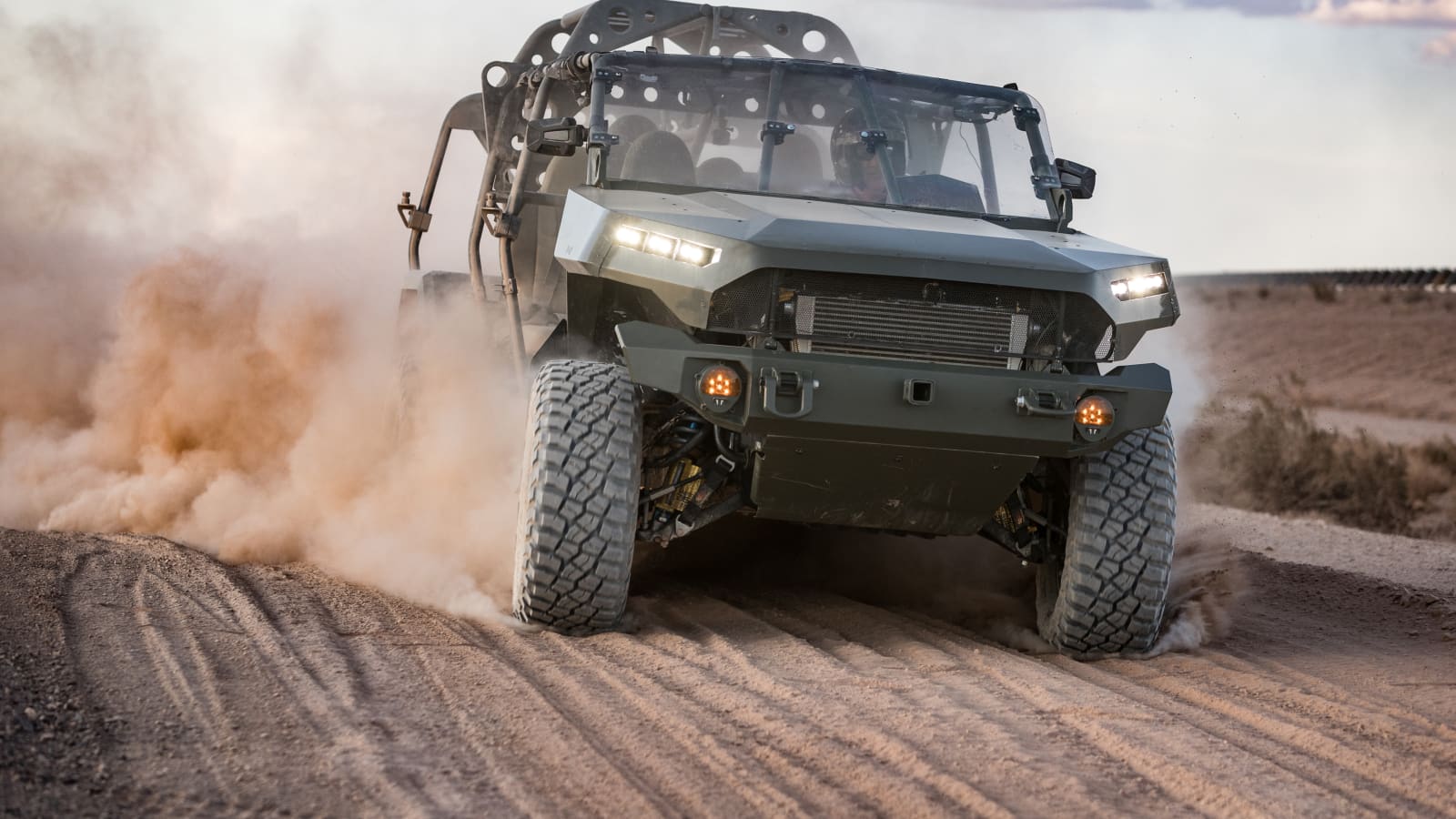
The GM Defense Infantry Squad Vehicle was engineered to meet U.S. military specifications, based on the Chevrolet Colorado ZR2 architecture. General Motors (GM) and Ford Motor have long competed in racing, vehicle sales, and other automobile-related sectors. However, their rivalry has expanded into the U.S. defense sector and energy storage systems.
Ford joined GM in pursuing U.S. military contracts after the Trump administration approached U.S. companies about leveraging their manufacturing expertise. Both automakers are focusing on military vehicles, with GM leading in defense contracts, including a recent $1 billion contract for infantry squad vehicles. GM’s defense division has been revived since 2017 and is expected to grow defense revenue to nearly $700 million by 2026, with positive earnings before interest and tax (EBIT) results this year. GM also collaborates with Lockheed Martin and other companies to enhance defense manufacturing capabilities.
Simultaneously, both companies are entering the energy storage systems (ESS) market, driven by rising consumer energy costs and demand from data centers. The global ESS market is projected to grow from $668.7 billion in 2024 to $5.12 trillion by 2034, with significant expansion in the U.S. GM’s energy business, though not yet offering its own ESS, partners with Redwood Materials for battery recycling and offers residential energy storage solutions. GM’s Ultium Cells joint venture in Tennessee produces battery cells for LG Energy Solution’s storage systems. GM is also investing in next-generation sodium-ion batteries with Denver-based startup Peak Energy.
Ford plans to invest $2 billion in its energy business, including converting a Kentucky battery factory to produce ESS units by late 2027 and dedicating factory space in Marshall, Michigan, for residential storage batteries. Ford’s Model e electric vehicle segment, which has faced losses, expects the ESS business to become a key driver of profitability by 2029.
Both companies have invested heavily in battery production capacity, which was initially aimed at electric vehicles but is now repurposed for energy storage. Analysts like Morgan Stanley’s Andrew Percoco view Ford’s ESS business as an underappreciated opportunity for profitability. Meanwhile, GM’s defense efforts are seen as a strategic move to diversify revenue amid slowing U.S. vehicle sales.
The defense and energy sectors represent new growth areas for the automakers, complementing their core businesses. While these markets are expected to be small portions of their overall revenue, they offer potential for diversification and long-term sustainability.
Source: CNBC